
Fevers in Kids
When to worry, and when you can rest easy


As a parent, I understand how stressful and worrisome it is when your child has a fever. It’s hard to see them look and feel crummy, and it’s even harder to know when you should get them seen.
There are so many false narratives out there about fever, so read on to understand why fevers happen, what you can do, and when you should see a doctor. If you prefer to watch my Instagram content on fevers instead, scroll to the bottom for the links.
What causes fevers?
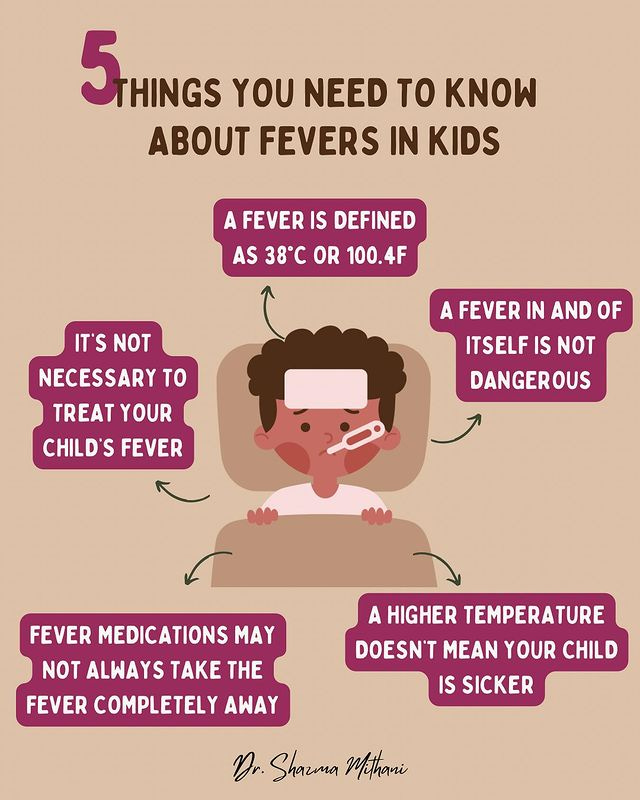
First and foremost, a fever itself is not dangerous. It is part of the body’s natural response to an infection and is thought to help fight off the infection as well. Most fevers are caused by viral infections, and less commonly caused by bacteria infections or non-infectious causes.
A fever is defined as 38°C or 100.4°F.
What are some common misconceptions about fevers?
One of the most common concerns parents come in with is being worried about a “high” fever. Rest assured that how high the fever is has nothing to do with what kind of illness your child has and is not dangerous. I suspect that these concerns are related to a false narrative that a high fever causes brain damage or febrile seizures. Thankfully, we know that neither of these are true.
When should you worry about a fever?
Again, a fever in and of itself is not dangerous. That being said, we do pay attention to other features that may indicate that there is a worsening or concerning infection that the fever is an indication of.
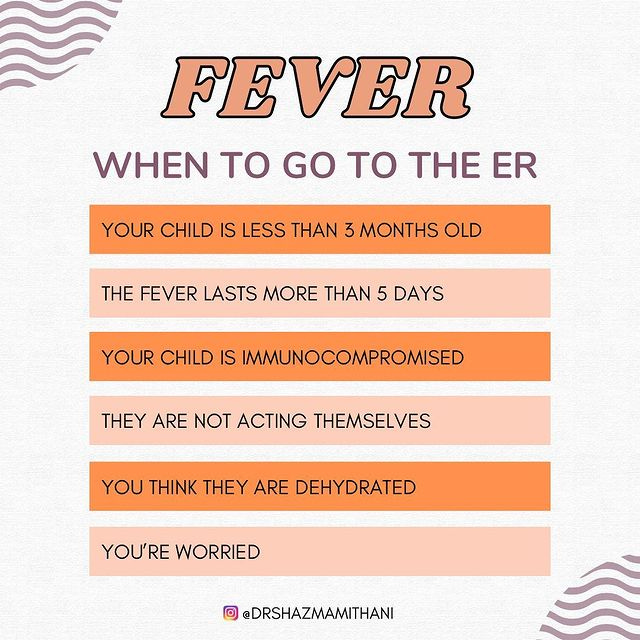
If any of the following situations occur, it’s important to see a doctor right away:
Any fever in any baby under 3 months - this is because their immune systems aren’t as developed and any infection can be dangerous for them
Any fever in someone who is immunocompromised (either from medications or an underlying health condition) - these patients can get more serious infections because of lower immune function
A fever for more than 4-5 days - this can indicate a possible bacterial infection or some non-infectious causes of fever that require assessment and further testing
Your child has a seizure
Your child isn’t drinking well
Your child is much more sleepy and difficult to wake up
Your child is confused or not acting themselves
Something doesn’t feel right and you’re worried
How should temperature be measured?
I often get a lot of questions about what the best way to measure temperatures in kids is. The answer is, it depends!
Rectal temperatures are the gold standard in young babies and remain the most accurate way to measure temperature in younger kids under 2 years old. This method should not be used in a child who is immunocompromised (for example, on chemotherapy).
Oral (mouth) temperatures are very accurate if done correctly, but they should only be used in kids 4 years old and older because younger kids can’t reliable hold the thermometer still in their mouths long enough to measure accurately.
Ear thermometers can be used in kids who are too young for oral thermometers. They shouldn’t be used in kids under 6 months because their ear canals are too small to get an accurate reading. Ear wax build up can also affect the reading.
Forehead thermometers measure the temperature from the temporal artery (an artery that runs along the forehead). They can be the kind that you touch to the skin and run across the forehead (more accurate) or the type where you hold the thermometer a few inches from the forehead (less accurate). When used properly, contact forehead thermometers can be very accurate. Non-contact forehead thermometers can be affected by things like direct sunlight, surrounding temperature and humidity, and skin sweating.
Armpit temperatures are the least accurate and often underestimate the temperature. These should be used if there’s no other safe option, and a lower threshold for fever should be used (37.5°C or 99°F).
How should fever be treated?
Because a fever isn’t dangerous, it’s not always necessary to treat it. If your child is happy, running around, and drinking well, there’s no need to treat their fever.
However, if your child is clearly uncomfortable or isn’t drinking as well as they should, it’s important to treat the fever. Both acetaminophen and ibuprofen are effective medications for fever. Be sure to talk to your doctor or pharmacist about dosing and frequency and whether these medications are appropriate for your child.
In general, it’s also important to keep your child comfortable with loose and light clothing, as well as hydration with fluids.
Where can I see the videos?
Here are the links to all of my Instagram videos and posts on fever:



*All information presented on Dr. Shazma Mithani’s website, social media pages, blog, newsletter, media/podcast interviews, or any other platforms are for educational purposes only and should not be taken as personal medical advice. These resources are to educate and should not replace the medical judgment and evaluation of a licensed healthcare provider who is evaluating a patient.
It your responsibility to seek appropriate medical attention when you are concerned about yourself or your children/family.
All opinions are my own and do not reflect the opinions of my employer, organizations, or hospitals that I may be affiliated with.
By using this site, you acknowledge the above statement and understand the information on this website is not medical advice. You will seek out care from a licensed healthcare provider for any medical question you have about yourself or a family member.